


EV Tyres Explained: Why Electric Cars Wear Tyres Faster
If you have moved from a petrol or diesel car to an electric one, you may have noticed something unexpected: your tyres do not last as long as they used to. This is a genuine pattern, not a myth. Electric vehicles can wear tyres faster than a similarly sized combustion car, mainly because of extra weight and the instant torque an electric motor delivers. That does not mean every EV chews through tyres, or that you need to buy a special set the moment you go electric. It means tyre wear on an EV depends on a few specific factors, and understanding them helps you choose the right tyre and get more miles out of it.
This guide explains why EV tyre wear happens, whether your car actually needs EV specific tyres, what those tyres do differently, and how to keep your tyres lasting as long as possible on UK roads.
Why Do Electric Cars Wear Tyres Faster?
There is no single cause. It is a combination of vehicle weight, the way electric motors deliver power, and driving style, and each one adds a little more load onto the tyre.
EVs Can Be Heavier
Battery packs are heavy, and that extra mass has to go somewhere. A Tesla Model 3, for example, weighs around 1,800kg, noticeably more than a similarly sized petrol hatchback. Extra weight increases the load pressing down on each tyre, which increases the forces acting on the tread during cornering, braking and even steady motorway driving.
This does not mean every EV is heavier than every petrol or diesel car on the road. The fairest comparison is between vehicles of a similar size and class, and even then, the gap has been narrowing as combustion cars, particularly SUVs, have grown heavier too. Where the comparison holds, though, extra weight means more tyre loading, more heat build-up, and generally faster tread wear.
Instant Electric Motor Torque
Electric motors deliver their maximum torque from a standstill, rather than building power gradually the way a petrol engine does. That instant response is one of the most noticeable things about driving an EV, and it is genuinely enjoyable. It also means it takes very little pedal pressure to spin the tyres against the road surface, which increases tread wear at the point where the car pulls away.
The motor itself is not the problem. A driver who eases away gently will place far less strain on their tyres than one who uses full throttle from every junction.
Strong Acceleration
Repeated hard acceleration increases wheel slip, triggers more intervention from the traction control system, and puts greater tread forces through the driven tyres. Two identical EVs, driven differently, can show very different wear patterns after just a few thousand miles. A driver who regularly uses the full performance on offer will likely need new tyres sooner than someone with a smoother driving style.
Regenerative Braking
Regenerative braking uses the electric motor to slow the car while feeding energy back into the battery, reducing how often the friction brakes are used. It changes the balance between motor braking and pad-and-disc braking, but it does not automatically mean faster tyre wear on its own. Tyre wear under regenerative braking is still shaped by the same underlying factors: vehicle weight, driving style, road surface, alignment, pressure and the tyre’s own construction. Be wary of claims that regenerative braking alone causes significant extra wear; the evidence for that is far less clear-cut than the effect of weight and torque.
Tyre Pressure and Load
Because EVs carry more weight, correct tyre pressure matters even more than on a combustion car. Under-inflated tyres flex more, generate more heat and wear unevenly at the edges. Over-inflated tyres wear faster in the centre of the tread and reduce grip. Always use the pressure printed on your vehicle’s door placard or handbook rather than copying a figure from another EV, since recommended pressures vary significantly between models.
Wheel Alignment
Poor alignment causes uneven wear patterns such as feathering or shoulder wear, and it shortens tyre life regardless of what the car is powered by. If an EV develops unusual or rapid wear, alignment is one of the first things worth checking, alongside pressure and tread depth.
Are EV Tyres Different?
EV specific tyres can differ from conventional tyres in several ways, but there is no single universal “EV tyre” that every electric car needs. Tyre manufacturers design EV ranges around a combination of higher load capacity, lower rolling resistance, reduced road noise, and tread compounds intended to cope with instant torque and extra weight. TyreSafe notes that without adaptation for this extra weight, tyres fitted to an EV can wear prematurely and need replacing more often than an owner is used to, which is why EV tyres are typically built with reinforced construction and may carry HL (high load) markings.
Not every tyre labelled for EV use is automatically the better choice for every electric car. The right tyre is the one that matches your specific vehicle’s requirements, not simply the one marketed as an “EV tyre”.
Do EV Cars Need Special Tyres?
Not automatically, no. An EV does not need a special tyre simply because it is electric. What matters is whether the tyre meets the vehicle’s required size, load index, speed rating and construction, along with any manufacturer specific approval markings. Some EV manufacturers do specify particular tyre models or characteristics for their cars, so always check your handbook and the tyre information placard before buying.
In practice, many EVs can run on suitable conventional tyres, provided those tyres meet the load and speed rating the manufacturer requires. You are likely to notice a difference in comfort, noise or efficiency compared with a proper EV specific tyre, but the car will still be safe and legal as long as the specification is met.
What Are EV Specific Tyres?
EV specific tyres are built around a few consistent priorities.
- Higher load capacity. Reinforced construction and a higher load index help the tyre cope with the extra weight of the battery pack without excessive flexing.
- Lower rolling resistance. Reducing the energy lost as the tyre rolls over the road helps protect driving range. TyreSafe’s guidance suggests EV tyres, through a combination of lower rolling resistance and optimised tread design, can improve battery range by up to 10 percent. This is not a fixed guarantee for every tyre and vehicle combination, but it illustrates how meaningful the effect can be.
- Reduced road noise. With no engine to mask road roar, tyre noise becomes more noticeable in an EV. Many EV tyres use a foam layer bonded inside the tyre cavity to absorb noise before it reaches the cabin.
- Tread and compound. Manufacturers balance grip, efficiency, wear resistance and wet performance differently for EV use, often with stiffer sidewalls to resist the extra stress from torque and weight.
Not every EV needs reinforced tyres. Smaller, lighter EVs may be perfectly well served by a suitable conventional tyre, so check what your specific model actually requires before assuming you need the most heavily reinforced option available.
EV Tyres vs Normal Tyres
| Factor | EV Specific Tyres | Conventional Tyres |
|---|---|---|
| Vehicle type | Designed with EV weight and torque in mind | Designed for a wider range of vehicles |
| Load requirements | Often higher load capacity, sometimes HL rated | Depends on the individual tyre’s specification |
| Rolling resistance | Frequently optimised for efficiency | Varies by model |
| Noise | Often designed with noise-reducing foam | Varies by model |
| Construction | May use reinforced or EV specific sidewalls | Depends on tyre |
| Price | Can be higher | Wide range of prices |
| Compatibility | Must match vehicle requirements | Must also match vehicle requirements |
EV specific tyres are not automatically superior in every situation. The correct tyre is the one that meets your vehicle manufacturer’s requirements and suits how and where you drive.
Are EV Tyres More Expensive?
EV tyres can cost more, but price depends on far more than whether the car is electric. Tyre size, brand, load rating, speed rating, wheel size and construction all affect price, and many EVs are fitted with large wheels and high performance specifications that push up replacement costs regardless of what powers the car. A premium 21-inch EV tyre will always cost more than a budget 16-inch tyre for a small hatchback, electric or otherwise.
It is not accurate to say all EV tyres cost more than all conventional tyres. What is fair to say is that if your EV requires a reinforced, low rolling resistance, large diameter tyre from a premium brand, you should expect to pay a premium for it.
What Are the Best EV Tyres?
There is no single best EV tyre for every driver. The right choice depends on your vehicle model, tyre size, driving style, annual mileage, how much motorway driving you do, and how much you value quiet running versus outright grip.
A few trade-offs are worth thinking through:
- Grip vs efficiency. A tyre optimised purely for low rolling resistance may sacrifice a little wet grip compared with a performance-focused compound.
- Noise vs performance. Foam-lined, comfort-oriented tyres are excellent for motorway cruising but are not always the sportiest option for a performance EV.
- Price vs longevity. A more expensive, reinforced tyre may work out cheaper per mile if it genuinely lasts longer under your driving conditions.
Major tyre manufacturers, including Michelin, Continental, Bridgestone, Pirelli and Hankook, all now produce dedicated EV ranges. Rather than naming one “best” tyre, the more useful approach is to check your vehicle handbook for the recommended size and load rating, then compare two or three tyres within that specification against your priorities.
Best EV Tyres UK
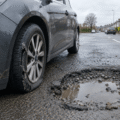
UK conditions add a few extra considerations. Wet grip matters more here than in drier climates, given how often British roads are wet, and it should never be sacrificed purely to chase a slightly lower rolling resistance figure. Potholes are also a genuine concern for reinforced EV tyres, since sidewall damage from a hard pothole strike can be costly to replace on a large diameter wheel.
For UK drivers, a sensible approach is to prioritise, in order: correct load and speed rating for your vehicle, strong wet weather performance, then efficiency and noise. Cold winter mornings also affect tyre pressure, since pressure drops as temperature falls, so it is worth checking pressures more often through autumn and winter.
How Long Do EV Tyres Last?
There is no universal mileage figure for EV tyre life, and any article that gives you one is guessing. Lifespan depends on vehicle weight, torque delivery, driving style, tyre compound and construction, pressure, alignment, load, road conditions and climate. Two identical EVs driven by different people can show very different tyre lifespans after the same number of miles.
What is fair to say is that EV tyre wear is not fixed or inevitable. Good maintenance and sensible driving habits can close much of the gap between an EV and an equivalent combustion car.
How to Make EV Tyres Last Longer
Check tyre pressure regularly. Use the pressure printed on your vehicle’s door placard, and check it monthly and before long journeys.
- Avoid unnecessary hard acceleration. Smoother throttle inputs reduce unnecessary stress on the tread.
- Check wheel alignment. Have this checked if the car pulls to one side or you notice uneven wear, and after any pothole strike.
- Rotate tyres where the manufacturer permits it. Rotation helps distribute wear more evenly across the set.
- Check tread regularly. Look for uneven wear, cuts, bulges or embedded debris.
- Avoid overloading the vehicle. Stay within the manufacturer’s permitted payload.
- Drive smoothly. Gentle acceleration, braking and cornering all reduce cumulative tread wear.
- Replace damaged tyres promptly. Do not continue driving on a tyre with structural damage, regardless of remaining tread depth.
EV Tyre Pressure and Maintenance
Correct pressure affects wear, efficiency, handling and braking performance, and it changes with temperature, so a tyre that was correctly inflated in summer may be under-inflated once the weather turns colder. There is no single “EV pressure” that applies across all models; different EVs can have significantly different recommended figures, so always use the number specified for your own vehicle rather than one you have seen quoted for a different car.
EV Tyres, Range and Rolling Resistance
Rolling resistance is the energy lost as a tyre deforms and rolls over the road surface, and it has a direct link to EV driving range. Lower rolling resistance tyres, correct pressure, appropriate tyre size and smoother driving conditions can all help reduce that energy loss. Tyre choice can genuinely influence efficiency, but be sceptical of any tyre marketed with a fixed, guaranteed percentage increase in range, since the real-world effect depends on your specific vehicle, driving conditions and how the tyre is maintained.
Why Tyre Noise Matters More in an EV
Electric motors are far quieter than combustion engines, which means road and tyre noise that would previously have been masked becomes much more noticeable in the cabin. Tyre construction and tread pattern both influence how much noise reaches the driver, and road surface plays a significant role too. This is why many EV specific tyres include acoustic foam bonded inside the tyre to dampen resonance before it travels into the cabin. Not every EV needs a specialist noise-reducing tyre, but if road noise bothers you, it is worth checking whether a tyre includes this feature.
EV Tyres vs Petrol and Diesel Car Tyres
| Factor | Electric Vehicle | Petrol/Diesel Vehicle |
|---|---|---|
| Vehicle weight | Can be higher depending on model | Varies |
| Torque delivery | Often available instantly | Varies by engine and transmission |
| Tyre wear | Can be higher in some conditions | Varies |
| Rolling resistance | Important for range efficiency | Important for fuel efficiency |
| Noise | Tyre noise more noticeable | Engine noise can mask some tyre noise |
| Tyre choice | Vehicle specific | Vehicle specific |
| Driving style | Strong influence on wear | Strong influence on wear |
It is not accurate to say every EV wears tyres faster than every petrol or diesel car. The comparison only holds reliably between similar vehicles driven in a similar way.
Common EV Tyre Wear Problems
If you notice any of the following, it is worth having your tyres and alignment checked promptly:
- Rapid tread loss compared with tyres on a previous car
- Wear concentrated on the inner or outer shoulder, often a sign of misalignment
- Feathering, where the tread blocks develop a saw-tooth edge
- Cupping, a scalloped wear pattern usually linked to suspension or balancing issues
- Steering vibration, which can point to balance or alignment problems
- Reduced wet grip or visible damage such as bulges or cuts
None of these should be diagnosed remotely. If you notice unusual or rapid wear, get the vehicle inspected by a qualified technician.
Final Thoughts
Electric cars can place greater demands on tyres because of vehicle weight, torque delivery and driving behaviour, but faster wear is not inevitable. The right tyre for your EV depends on your vehicle’s specification, tyre size, load and speed rating, and how and where you drive, not simply on whether a tyre is labelled “for EVs”. Keep pressures correct, have alignment checked when something feels off, and replace tyres before they become a safety risk rather than after.
If you notice uneven wear, a vibration through the steering, or you are due a change, our mobile tyre fitting technicians can come to your home or workplace to inspect, repair or replace your EV’s tyres, wherever you are in the UK.
Common UK Questions About EV Tyres
Can I fit normal tyres to an EV?
Often yes, provided the tyre meets the load index, speed rating and size specified by the manufacturer. Check the vehicle handbook and the tyre information placard first.
Do EV tyres improve range?
They can, mainly through lower rolling resistance, but the effect varies by vehicle and driving conditions rather than being a fixed, guaranteed figure.
Are premium EV tyres worth the extra cost?
For higher mileage drivers, often yes, since better wear resistance and efficiency can offset the higher purchase price over the tyre’s life. For lower mileage drivers, a well-specified mid-range tyre may be more cost effective.
Why are my EV tyres wearing unevenly?
Uneven wear usually points to incorrect pressure, poor alignment, or an aggressive driving style rather than being an inherent EV problem.