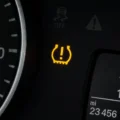



Can You Drive on a Flat Tyre? (And How Far Before Damage)
You hear the flap-flap-flap, the steering goes heavy, and your first instinct is to push on to the next garage. So can you drive on a flat tyre? In almost every case, no, not safely and not legally. The only exception is creeping a few hundred metres at walking pace to get out of immediate danger, such as off a live lane and onto a hard shoulder. Beyond that, you are destroying the tyre, risking the wheel, and breaking the law. This guide gives you the concrete UK answer most pages dodge: exactly how far you can go, why a flat tyre can’t carry your car, what the penalties are, and the safe alternative to chancing it.
The Short Answer: How Far Can You Really Go?
Most online answers stop at a vague “not far,” which is no help when you’re sitting at a junction with traffic behind you. Here is the practical version. If you are in genuine danger, stuck in a live carriageway, blocking a junction, or stopped somewhere with no signal, you can ease the car forward at under 10 mph to the nearest safe spot. Think the length of a slip road, not a journey to the next town.
The moment you are safe, stop. Every extra metre adds heat, friction, and damage. There is no scenario where reaching “the garage two miles away” is worth it: by the time you arrive, the tyre is shredded, and the wheel may be too. Distance is not your friend here; stopping early almost always costs less than carrying on.
Why A Flat Tyre Can’t Carry Your Car
A tyre holds your car up with air, not rubber. When the pressure drops to zero, the sidewalls (the soft outer walls of the tyre) collapse because they were never designed to bear the vehicle’s weight.
With no air to support it, the load shifts onto two things that can’t cope: the metal wheel rim and the flattened sidewall, now crushed against the road. As the wheel turns, this generates intense heat and friction in seconds. The rubber begins to tear away from the rim, and once it does, you are effectively driving on bare metal.
That’s why the damage escalates so fast. A short distance can bend or crack the alloy, chew through the sidewall, and even strain the suspension, steering, and brake lines. You also lose a huge amount of control; the car pulls hard to one side, and braking distances grow. This is why manufacturers like Pirelli are blunt that a flat tyre means stop now, not soon.
Is It Illegal To Drive On A Flat Tyre In The UK?
Yes, driving on a flat or otherwise dangerous tyre can leave you with a fine of up to £2,500 and 3 penalty points, and that’s per tyre.
According to gov.uk, if you’re stopped by police with illegal tyres, you can receive a £2,500 fine and 3 penalty points for each affected tyre. The UK tyre safety charity TyreSafe confirms the same figures and points out the alarming maths: if all four tyres are illegal, the points alone could exceed the limit and cost you your licence entirely. A clearly flat tyre also makes your vehicle “in a dangerous condition,” an offence in its own right.
There’s a knock-on risk too. If you have a collision while knowingly driving on a defective tyre, your insurer may refuse to pay out, leaving you liable for the damage to your car and anyone else’s. So the £2,500 is only the headline cost. TyreSafe also notes that defective tyres are linked to around 190 people killed or seriously injured on UK roads each year, which is why this is treated so seriously.
What About Run-Flat Tyres?
If your car has run-flats (check your handbook or the tyre sidewall for markings like “RFT,” “ROF,” “SSR” or “ZP”), you can usually keep driving up to around 50 miles at a reduced speed of roughly 50 mph. That’s enough to get you home or to a fitter rather than stranded at the roadside.
But two cautions apply. First, a run-flat that has been driven on while deflated almost always needs replacing, not repairing; the internal structure is compromised even if it looks fine. Second, never exceed the speed or distance limit, as that causes the same kind of irreversible damage as a standard flat. Run-flats buy you time and safety, not a free pass.
What To Do Instead: The Safe Steps
If you’ve got a flat, here’s the sequence that protects you, your car, and your wallet:
- Slow down gently and pull over. Let the car lose speed naturally rather than braking hard, and find the safest spot you can — a lay-by, hard shoulder, or quiet verge.
- Switch on your hazards and, on a motorway, get yourself and passengers behind the barrier where possible.
- Don’t try to “limp” it onwards. Once you’re safe, the driving is done. Pushing on only multiplies the cost.
- Call for help rather than risk a roadside spare swap in a dangerous spot. A mobile fitter can come to you.
This is where booking an emergency tyre fitting makes a difference. Instead of gambling on a £2,500 fine and a wrecked wheel, a technician comes to your location and sorts it on the spot.
Final Thoughts
So, can you drive on a flat tyre? Only far enough to reach safety, at walking speed, and only when you have no other option; anything more risks the rim, the sidewall, your control of the car, and a fine of up to £2,500 and 3 points per tyre. The honest takeaway is that distance never pays here: stopping early is almost always cheaper and safer than pushing on.
If you’re stranded right now, don’t gamble it. Our mobile tyre fitting service brings the workshop to you, wherever you’ve stopped, so you can get back on the road safely and legally without ever driving on a flat.
Frequently Asked Questions
Can you drive on a flat tyre slowly to avoid damage?
No, even at walking pace, a flat tyre starts taking damage immediately. Driving slowly only slightly delays the harm; it doesn’t prevent it. The sidewall still crushes against the road, and the rim still bears weight it can’t handle.
How far can you drive on a flat tyre before the wheel is damaged?
Wheel damage can begin within the first few hundred metres, and a single mile is often enough to ruin both the tyre and the alloy rim. There is no “safe” distance on a fully flat tyre; the question is only how much it will cost.
Is it illegal to drive on a flat tyre in the UK?
Yes. Driving on a dangerous or defective tyre can mean a fine of up to £2,500 and 3 penalty points per tyre, according to gov.uk. A flat tyre can also render the whole vehicle “in a dangerous condition,” and an accident caused by it may invalidate your insurance.
Can I drive further on a run-flat tyre?
Yes, most run-flat tyres are designed to travel up to around 50 miles at about 50 mph after a puncture. Check your handbook for the exact limit, and don’t exceed it. A run-flat that’s been driven on deflated will usually need replacing rather than repairing.
Should I fit the spare or call a mobile fitter?
If you’re somewhere safe and confident changing a wheel, the spare is fine. But on a motorway, a busy road, or in poor visibility, changing a tyre at the roadside is genuinely dangerous; calling a mobile fitter to come to you is the safer choice.