

Legal Tyre Tread Depth UK: What Every Driver Needs to Know
The legal tyre tread depth in the UK is 1.6mm for cars and vans, but that single figure doesn’t tell you the whole story. Where that 1.6mm has to be measured, whether the rule is different for motorcycles and lorries, and what actually happens if you fall short all matter just as much as the number itself. Get any of it wrong and you’re not just risking a fine, you’re driving on tyres that can’t grip the road properly in the wet.
Here’s exactly what the law says, broken down by vehicle type, with no guesswork.
The 1.6mm rule for cars and vans
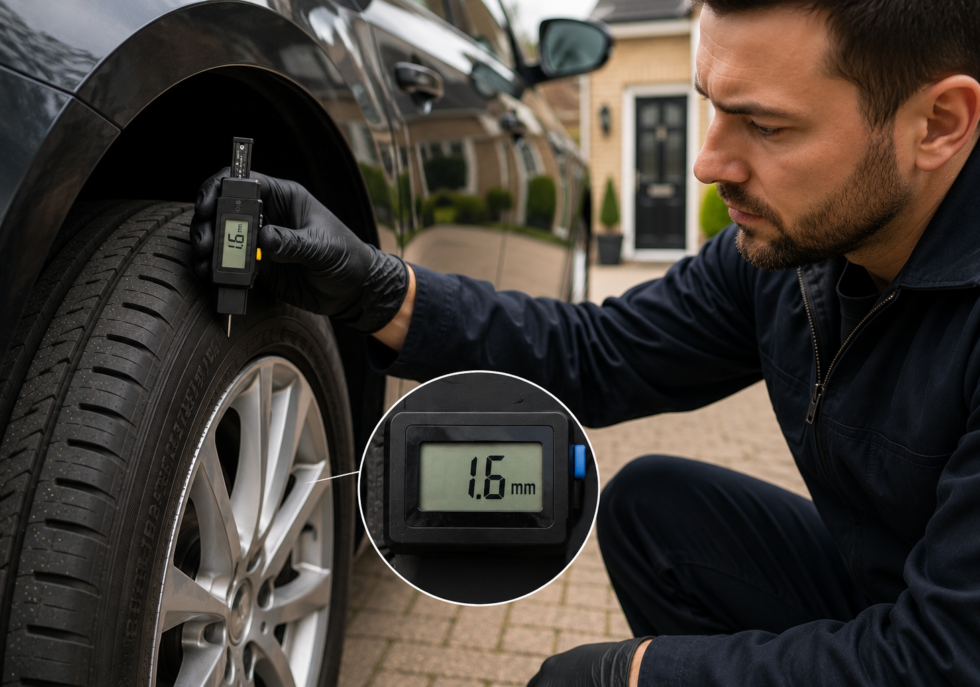
For cars, vans and other vehicles up to 3.5 tonnes, UK law sets the legal minimum tyre tread depth at 1.6mm. This comes from the Road Vehicles (Construction and Use) Regulations 1986, and it isn’t as simple as one shallow patch making a tyre illegal.
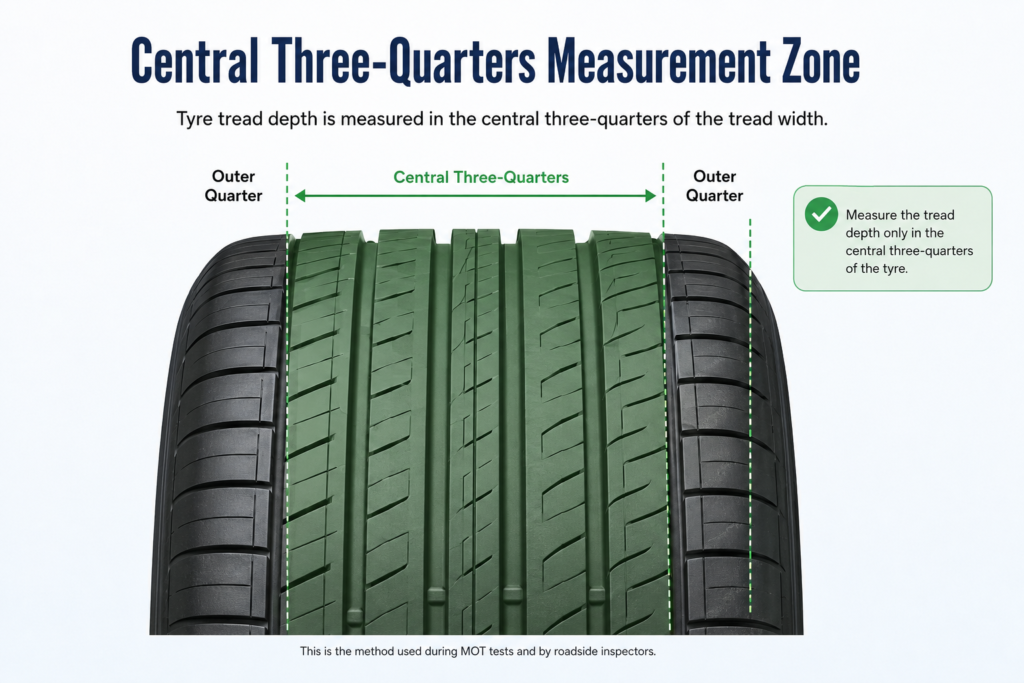
The rule requires 1.6mm across a continuous band covering the central three quarters of the tyre’s width, right around its entire circumference. In plain terms, the middle 75% of the tyre has to meet the limit all the way round, not just at one point you happen to check. A tyre can look fine at first glance and still be illegal if one section has worn down unevenly, which is exactly why uneven wear from poor wheel alignment is worth taking seriously.
Does the limit change for other vehicles?
Yes, and this is where a lot of drivers get caught out assuming one number applies to everything on the road.
| Vehicle type | Legal minimum tread depth | Measured across |
| Cars, vans and 4x4s (up to 3.5 tonnes) | 1.6mm | Central ¾ of tread width, full circumference |
| 1.6mm | Central ¾ of tread width, full circumference | |
| Motorcycles and mopeds over 50cc | 1mm | ¾ of tread width, visible tread on the remaining ¼ |
| Motorcycles and mopeds up to 50cc | No set figure | Original tread pattern grooves must remain visible |
| HGVs, buses and other vehicles over 3.5 tonnes | 1mm | Central ¾ of tread width, full circumference |
It might seem odd that a lorry needs less tread than a family car, but it comes down to weight and contact patch. Heavier vehicles put more of the tyre in contact with the road, which helps them shift water even at lower tread depths. That doesn’t mean fleet operators treat 1mm as a target. Most HGV operators replace tyres well before they get close to the legal floor, because braking performance drops off long before a tyre is technically illegal.
How the measurement actually works
The three-quarters rule catches people out more than the millimetre figure does. Tread wear indicators, the small raised bars moulded into the base of the main grooves, are set at exactly the legal minimum for the vehicle type. Once the tyre surface wears level with these bars, you’re at the limit.
The quickest way to check at home is the 20p test, and we’ve covered exactly how to do that step by step in our 20p tyre tread test guide, including where on the tyre to check and how often to do it.
What happens if you’re caught below the limit
If a tyre falls below the legal tread depth, it will fail an MOT outright, and driving on it is an offence whether or not you’ve noticed. Police and DVSA officers can and do stop vehicles for roadside checks.
The penalty is a fine of up to £2,500 and three penalty points, and this applies per tyre, not per vehicle. If all four tyres on a car are found to be illegal, that’s a maximum of £10,000 and twelve points, which is enough to mean a court summons and a real risk of losing your licence. Beyond the legal risk, worn tyres take noticeably longer to stop in the wet and are far more prone to aquaplaning, so this is one area where staying just inside the law still isn’t the same as staying safe.
Staying on the right side of the law
The legal tyre tread depth in the UK isn’t complicated once you know where to measure and what applies to your vehicle, but it’s easy to let it creep up on you between checks. If you’re not sure where your tyres stand, our mobile technicians can check your tread depth on your driveway or at work and fit replacements on the spot, usually within 30 to 60 minutes of arriving.
For the full picture on tread depth, MOT rules and what the law means for your safety, read our complete guide to tyre tread depth and UK law.
Frequently Asked Questions
What is the legal tyre tread depth in the UK?
or cars and vans up to 3.5 tonnes, the legal minimum is 1.6mm, measured across the central three quarters of the tyre’s width around its entire circumference. Motorcycles and HGVs have different limits, covered in the table above.
Can I drive with 1mm of tread on a car tyre?
No. Cars and vans must meet the 1.6mm minimum. A tyre at 1mm is below the legal limit for a car and would fail an MOT immediately, even though 1mm is the correct legal minimum for a motorcycle or HGV.
Is the legal tread depth the same for vans as it is for cars?
Yes. Any vehicle up to 3.5 tonnes, including vans, 4x4s and caravans, must meet the same 1.6mm minimum as a standard car.
What is the legal tread depth for motorcycles in the UK?
For motorcycles and mopeds over 50cc, the legal minimum is 1mm across three quarters of the tread width, with visible tread on the remaining quarter. Bikes up to 50cc have no set figure but must show the original tread pattern clearly.
Do all four tyres need to individually meet the legal limit?
Yes. Each tyre is assessed on its own, and the £2,500 fine and three penalty points apply per illegal tyre, not per vehicle.