

TPMS Warning Light Won’t Go Off: What It Means and What to Do
You’ve topped up your tyres, checked the pressures twice, and the TPMS warning light is still glaring at you from the dashboard. It’s a common problem, and it usually has a straightforward explanation. The tyre pressure monitoring system, or TPMS, is designed to warn you when a tyre is significantly underinflated, but the light can stay on for several other reasons too, from a genuinely faulty sensor to a system that simply needs resetting. In this guide, we’ll explain exactly what the TPMS light means, why it might not be switching off, whether it’s safe to keep driving, and what to do next.
What Does the TPMS Warning Light Mean?
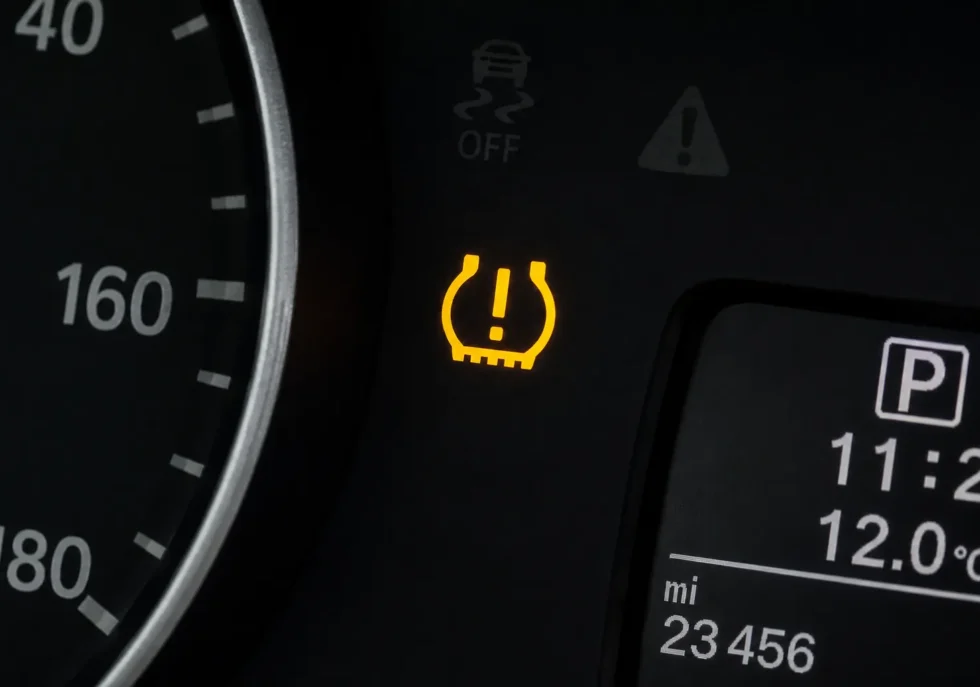
The TPMS warning light looks like a tyre cross-section with an exclamation mark in the middle, sometimes shown in yellow or amber. It comes on when your car’s tyre pressure monitoring system detects that one or more tyres has dropped below a safe pressure threshold. Most systems trigger the light once pressure falls by around 6 to 7 psi, or roughly 20 to 25% below the recommended figure, though this varies slightly between manufacturers.
TPMS has been a legal requirement on new passenger vehicles sold in the UK and EU since November 2014, following on from a 2012 rule that applied to all new car types first approved that year. In the UK, legislation that came into force on 1 January 2015 means vehicles fitted with TPMS from new must have a fully working system when they’re tested at MOT time. If your car was built after these dates, it will almost certainly have TPMS fitted as standard.
It’s worth remembering that TPMS is a helpful safety net, not a substitute for checking your tyres yourself. Pressure can drop gradually over weeks without ever being enough to trigger the warning, so a monthly manual check with a proper gauge is still the best habit to keep.
Why Won’t My TPMS Light Go Off?
If you’ve already put air in your tyres and the light is still on, one of the following is usually to blame.
| Cause | What’s Happening | What to Do |
| Tyres still under the correct PSI | The pressure hasn’t reached the recommended figure in every tyre, not just the one you topped up | Check every tyre against the figure on the door placard or in the handbook, when the tyres are cold |
| System hasn’t reset itself yet | Many systems need a short drive at moderate speed before the light clears | Drive for 10 to 15 minutes and see if it switches off on its own |
| Faulty or dying TPMS sensor | Sensor batteries typically last several years but do eventually fail | Have the sensor tested and, if needed, replaced by a tyre specialist |
| Slow puncture | A tyre losing air gradually will keep re-triggering the light even after you top it up | Get the tyre inspected for a puncture or damage as soon as possible |
| Sensor damaged during fitting | TPMS sensors can be knocked or cracked when a tyre is changed | Ask your fitter to check and recalibrate sensors after any tyre change |
| Cold weather | Air contracts in cold temperatures, which can drop pressure enough to trigger the light | Check pressures more often in winter and inflate to the cold pressure setting |
| Spare tyre without a sensor | Some spares don’t carry a TPMS sensor, which some systems flag as a fault | Check your handbook, as this is often normal rather than a fault |
| TPMS module or wiring fault | Less common, but a fault in the control unit itself can keep the light on permanently | This needs diagnostic checking by a qualified technician |
If you’ve genuinely correct pressure across every tyre and the light stays on, it’s usually a sensor or system fault rather than an inflation problem, and it’s worth getting it looked at rather than ignoring it.
Direct vs Indirect TPMS
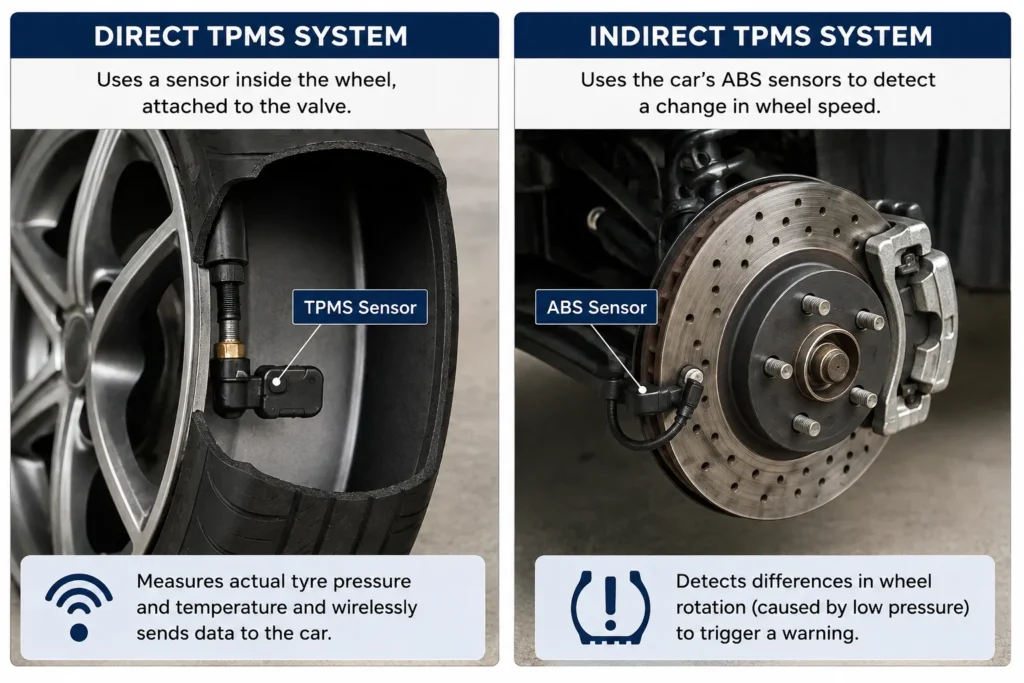
Not every car’s TPMS works the same way, and understanding which type yours has can help explain why the light is behaving the way it is.
| Feature | Direct TPMS | Indirect TPMS |
| How it works | Radio sensors mounted inside each wheel measure the actual pressure and send the data to a control unit | Uses the existing ABS sensors to compare wheel rotation speeds and estimate pressure changes |
| Accuracy | Reads real pressure per tyre, generally more precise | Estimates based on rotation, less precise |
| Needs resetting after inflation? | Usually not | Often yes, via a dashboard menu or button |
| Common fault | Sensor battery or physical damage | Recalibration not carried out after a pressure change |
| Cost to repair | Sensor replacement, typically £50 to £150 per wheel depending on the vehicle | Usually just a system reset, no parts needed |
If your car needs a manual reset after inflating the tyres and this hasn’t been done, that alone can explain why the light won’t clear.
Is It Safe to Drive With the TPMS Light On?
| Situation | Safe to Drive? | Recommendation |
| Light on, tyres slightly low | Yes, with caution | Drive gently to the nearest safe place to inflate and check pressures |
| Light on, one tyre visibly flat or damaged | No | Do not drive, arrange recovery or mobile tyre assistance |
| Light stays on after correct inflation | Yes, but get it checked soon | Book a diagnostic check to rule out a sensor or system fault |
| Light flashing rather than staying solid | Depends on the vehicle, often indicates a system fault rather than low pressure | Check your handbook and have the system inspected |
In general, you can legally continue driving with the tyre pressure warning light on, but you should slow down and drive cautiously to avoid causing further damage to the tyre. If a tyre feels soft, the car pulls to one side, or you hear anything unusual, stop as soon as it’s safe and check the tyre visually before continuing.
How to Reset the TPMS Warning Light
The exact process depends on your car, but the general steps are similar across most makes:
- Check every tyre is at the correct cold pressure using the figures on the door placard or in the handbook, not just the tyre you topped up.
- Find the reset method for your vehicle. Many cars have a TPMS button, often near the steering column, that you hold down until the light flashes and switches off. Others need you to navigate a dashboard menu.
- Drive at a steady speed for 10 to 15 minutes. Some systems reset automatically once they detect correct pressure over a short drive, without needing a manual reset at all.
- If the light stays on after this, don’t keep repeating the process. A light that won’t clear despite correct pressure is telling you something else is wrong.
If your handbook isn’t to hand, a quick search for your exact make and model plus “TPMS reset” will usually bring up the specific steps, since the process genuinely does vary between manufacturers.
Does a Faulty TPMS Fail an MOT?
| Vehicle Type | TPMS Required? | MOT Result if Faulty |
| M1 passenger car, first used from 1 January 2012, fitted with TPMS | Yes | Major fault, MOT failure |
| Older vehicle without TPMS fitted from new | Not required | Not tested, no effect on MOT |
| Light on due to low pressure only, not a system fault | N/A | Tester should not fail for this alone |
TPMS defects were originally treated as a minor issue that wouldn’t fail an MOT, but this changed in June 2019, when the DVSA’s inspection manual reclassified a TPMS malfunction as a major defect. A major defect means the car will fail its MOT until the fault is resolved.
It’s important to note that the tester’s job is to establish whether the light is showing a genuine system fault, not simply doing its job by flagging low pressure. The inspection only applies to passenger vehicles with four or more wheels, no more than eight passenger seats excluding the driver’s, that were first used on or after 1 January 2012. If your tyres are all correctly inflated and the light is on because of a sensor or module fault, that’s the scenario most likely to cause a failure, so it’s worth sorting before your test date rather than hoping it clears itself.
When to Get It Checked by a Professional
A quick top-up and a short drive solves the problem for plenty of drivers, but book a proper check if any of the following apply:
- The light stays on after every tyre is confirmed at the correct pressure
- The light flashes rather than staying solid
- You’ve had a puncture repaired or a tyre changed recently and the light appeared afterwards
- The light keeps coming back within a few days of resetting it
- You can’t find or reach the reset function for your vehicle
A technician can plug in a diagnostic tool to read exactly which sensor or wheel is flagging a fault, which saves you guessing and potentially replacing the wrong part. If you suspect a puncture or damaged tyre alongside the warning light, our mobile tyre repair service can inspect and fix it at the roadside or wherever you’re parked.
Final Thoughts
A TPMS light that won’t go off is rarely something to ignore, but it’s also rarely a reason to panic. Start by checking every tyre against the correct cold pressure, give the system a short drive to reset, and if the light still won’t clear, treat it as a sign that a sensor or the system itself needs a proper look. Given that a genuine TPMS fault can now fail your MOT, sorting it early is worth the ten minutes it takes.
If you’d rather have someone check it properly than keep guessing, TyresFlow’s mobile tyre fitting and repair technicians can come to you, wherever you are, and get your TPMS sorted without the trip to a garage.
Frequently Asked Questions
What does the TPMS warning light mean?
The TPMS warning light means your car’s tyre pressure monitoring system has detected that one or more tyres has dropped below a safe pressure level, usually around 20 to 25% under the recommended figure. It can also mean the system itself has a fault. Checking all four tyres against the correct pressure is always the first step.
Why won’t my TPMS light go off after inflating my tyres?
This usually happens because one tyre is still slightly under pressure, the system hasn’t reset itself yet, or your car needs a manual reset that hasn’t been carried out. It can also mean a sensor has failed. If pressures are correct across every tyre and the light stays on, it’s worth getting the sensors checked.
Can I drive with the TPMS warning light on?
Yes, it’s legal to keep driving with the light on, but you should drive cautiously and get the tyres checked as soon as possible. If a tyre looks visibly flat or damaged, don’t drive on it. Continued driving on a significantly underinflated tyre increases the risk of a blowout.
Is the TPMS warning light an MOT failure?
It can be. Since June 2019, a TPMS malfunction has been classed as a major defect under DVSA rules, which means the car will fail its MOT if the tester determines the light indicates a genuine system fault rather than simply low pressure. This applies to M1 passenger vehicles first used on or after 1 January 2012 that were fitted with TPMS from new.
How do I reset the TPMS light?
Most cars have either a dedicated TPMS reset button, often near the steering column, or a setting within the dashboard menu. After correcting all tyre pressures, hold the button until the light flashes, or follow your handbook’s instructions. Some systems reset automatically after a short drive instead.
Does cold weather trigger the TPMS light?
Yes. Tyre pressure drops as temperature falls, and a cold snap can be enough to push pressure below the warning threshold even if nothing else has changed. Checking pressures more regularly through autumn and winter helps avoid unexpected warnings.
Can a faulty sensor keep the warning light on?
Yes. TPMS sensors contain a small battery that eventually wears out, and the sensor itself can be damaged during a tyre change or by road debris. A faulty sensor will often keep the light on regardless of how well inflated your tyres actually are.
How much does it cost to replace a TPMS sensor?
Replacing a faulty TPMS sensor typically costs in the region of £50 to £150 per wheel in the UK, depending on the vehicle and whether the new sensor needs coding to the car’s computer. Getting a diagnostic check first confirms which sensor actually needs replacing.
External Sources Referenced
- TyreSafe — https://www.tyresafe.org/tyre-advice/pressure/tyre-pressure-monitoring-system/
- GOV.UK, Matters of Testing (DVSA blog) — https://mattersoftesting.blog.gov.uk/common-mistakes-made-by-mot-testers/
- Halfords UK tyre pressure warning light guide — https://www.halfords.com/tyres/advice/what-tyre-pressure-warning-light-means-how-to-reset.html