


How to Store Tyres Correctly: A Complete UK Guide
This article has been reviewed by a TyresFlow mobile tyre fitting technician with hands on experience in tyre fitting, seasonal tyre changeovers and tyre inspections. As part of their work, they regularly check tyres before refitting, including looking for signs of age related cracking, sidewall damage, uneven wear and other issues that may not be obvious to drivers. Their practical experience helps ensure that tyre safety advice is clear, useful and based on real world vehicle and tyre checks.
Tyres age even when they’re not being driven on. Left in the wrong spot, a perfectly good set of winter or summer tyres can crack, stiffen, or distort before you ever get to use them again. Storing tyres correctly isn’t complicated, but it does mean getting a few things right: cleaning them properly, keeping them away from heat, sunlight and chemicals, and storing them the right way up depending on whether they’re on rims or not. This guide covers exactly how to do that, whether you’ve got a garage, a shed, or just a corner of the house to work with.
What Is the Best Way to Store Tyres?
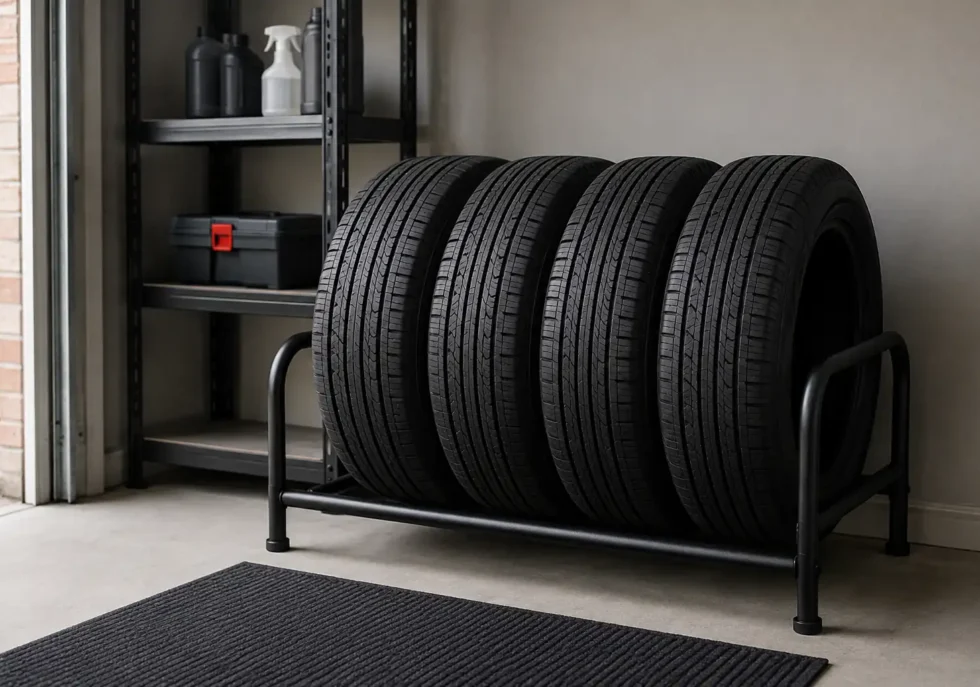
The best way to store tyres is clean, dry, and indoors, out of direct sunlight, away from heat sources and chemicals, at a steady cool temperature. Tyres with rims should be stored flat or hung; tyres without rims should be stored upright on their tread, never stacked flat or left leaning for long periods, as this can cause them to distort.
How to Prepare Tyres Before Storage
Getting tyres ready properly makes the biggest difference to how well they hold up in storage.
- Clean them thoroughly. Wash off brake dust, road grime, and, for winter tyres, any residual road salt. A tyre brush and water is usually enough; if you use detergent, rinse it off completely afterwards.
- Dry them fully. Towel-dry, then leave them somewhere sheltered for a day or so until you’re confident there’s no dampness left, especially in the tread grooves. Storing a damp tyre risks trapping moisture inside the structure, which can cause problems later, and in cold weather that moisture can freeze and crack the rubber.
- Inspect each tyre. Check for cuts, bulges, embedded stones, or uneven wear before they go into storage, not just when you take them out.
- Label each tyre. Note which corner of the car it came from (front left, rear right, and so on). This makes it far easier to rotate them correctly when they go back on.
- Don’t apply any dressing or tyre shine. Manufacturer guidance is consistent on this: no conditioners, oils, or gloss products before storage, as these can affect the rubber compound rather than protect it.
How to Store Tyres With Rims vs Without Rims
How you position a tyre for storage depends entirely on whether it’s still mounted on a wheel.
| Storage Type | Recommended Position | Why |
|---|---|---|
| Tyres with rims | Stack flat (on top of one another) or hang on wall hooks | The rim supports the tyre’s shape, so flat stacking or hanging won’t cause distortion the way it would without a rim |
| Tyres without rims | Store upright, standing on their tread | Standing prevents flat-spotting and structural distortion, which can happen if a rimless tyre is left lying flat or leaning for weeks |
If you’re storing rimless tyres upright for several months, roll each one a quarter turn every few weeks. This stops one section of the tyre bearing all the weight the whole time, which can otherwise lead to a permanent flat spot.
How to Store Winter Tyres
Winter tyres spend roughly half the year sitting idle, so getting their storage right matters more than for a set you barely touch. Michelin’s guidance is clear on the seasonal cut-off: winter tyre rubber is designed to stay flexible in the cold, but once outside temperatures rise consistently above 7°C, the compound softens and wears faster, which is why it’s recommended to switch back to summer tyres at that point rather than run winter tyres year-round.
Before storing winter tyres for the summer:
- Wash off any road salt, as this is more corrosive to wheels and can degrade rubber over time if left on.
- Dry them completely.
- Note their fitted position for next season.
- Store them following the same rim or no-rim rules above, away from sunlight and heat.
When the next winter comes round, inspect them properly before refitting rather than assuming they’re ready to go straight back on.
Ideal Tyre Storage Conditions
| Factor | Recommended Approach | Why It Matters |
|---|---|---|
| Sunlight | Store indoors, out of direct sun | UV exposure dries out the rubber and speeds up surface cracking |
| Temperature | Cool and stable, avoiding extremes | Repeated heating and cooling accelerates ageing; a basement or workshop is often steadier than a garage or attic |
| Moisture | Dry environment, tyres fully dried before storage | Damp conditions can allow moisture into the tyre structure and corrode metal components inside |
| Ventilation | Reasonable air circulation, not a sealed damp space | Helps prevent condensation building up around stored tyres |
| Chemicals | Kept well away from fuel, oil, solvents, and paint | Chemical exposure can alter and weaken the rubber compound |
| Heat sources | Away from boilers, radiators, and direct heaters | Constant heat has the same ageing effect as sun exposure |
| Storage surface | Clean, and free from grease or standing water | Prevents contamination and surface damage while tyres are stationary |
Can Tyres Be Stored in a Garage?
Yes, a garage can work well, provided it’s dry, ventilated, and the tyres aren’t sitting in direct sunlight through a window or up against an exterior wall that gets very hot in summer. The main things to watch for in a garage are stored chemicals (petrol, oil, paint, solvents) and temperature swings, since an uninsulated garage can get considerably hotter or colder than the rest of the house. If your garage ticks those boxes, it’s a perfectly reasonable place to keep a spare set of tyres.
How to Store Tyres at Home Without a Garage
Not everyone has a garage, and that’s fine. A dry shed, a covered outbuilding, or even an unused corner of a utility room or loft (as long as it isn’t too hot) can all work. The same rules apply wherever you choose: keep tyres out of sunlight, off damp ground, away from chemicals, and positioned correctly for whether they have rims or not.
If you genuinely have no suitable indoor space and need to store tyres outside for a short period, raise them off the ground and cover them with a breathable, waterproof cover rather than sealing them in something airtight, which can trap moisture underneath. This should only be treated as a short-term solution rather than how you store tyres long term.
How to Store Tyres Long Term
For storage stretching across several months, a bit more care goes a long way:
- Follow the full cleaning and drying process before you start.
- Use large, opaque plastic bags for tyres stored without rims, squeezing out as much air as possible before sealing, which helps slow the evaporation of the protective oils in the rubber.
- Keep the storage area at a stable, moderate temperature throughout.
- Check on stored tyres periodically, every couple of months if possible, rather than leaving them completely untouched until you need them.
- Roll rimless tyres occasionally to avoid one section bearing the weight for too long.
What to Check Before Refitting Stored Tyres
Before any stored tyre goes back on your car, check it properly rather than assuming it’s fine:
- Look for cracking on the sidewall or in the tread grooves, which is the clearest sign of age-related degradation.
- Check tread depth is still above the UK legal minimum of 1.6mm across the central three-quarters of the tyre, measured around the full circumference.
- Look for bulges or soft spots, which can indicate internal damage regardless of how carefully the tyre was stored.
- Check the pressure before fitting, as tyres will lose some pressure naturally even sitting unused.
- If in doubt, especially on an older tyre, get it inspected by a tyre technician before it goes back on the road.
Common Tyre Storage Mistakes
| Mistake | Potential Problem | Better Approach |
|---|---|---|
| Leaving tyres in direct sunlight | UV exposure dries and cracks the rubber surface | Store indoors, away from windows or direct light |
| Storing near heat sources | Accelerates rubber ageing in the same way as sun exposure | Keep well clear of boilers, radiators, and heaters |
| Storing next to chemicals or fuel | Can alter and weaken the rubber compound | Store away from petrol, oil, solvents, and paint |
| Putting away dirty or wet tyres | Trapped moisture and grime can damage the tyre structure over time | Clean and fully dry tyres before storing them |
| Ignoring rim vs no-rim positioning | Stacking rimless tyres flat, or leaning them for months, can cause distortion | Store with rims flat or hung; store without rims upright |
| Skipping the pre-refit inspection | Age-related damage can go unnoticed until it’s a safety issue | Always check tread, sidewalls, and pressure before refitting |
UK Legal Requirements vs Storage Recommendations
It’s worth being clear about the difference between the two. There’s no UK law that dictates how you must store a tyre while it’s off the car. What matters legally is the condition of the tyre once it’s back on your vehicle and in use. The legal minimum tread depth in the UK is 1.6mm across the central three-quarters of the tyre, around its full circumference, and tyres with cuts, bulges, or exposed cords are also illegal to drive on regardless of tread depth. Poor storage doesn’t break the law by itself, but it can be the reason a tyre later fails to meet these legal standards, which is exactly why storing tyres properly is worth the effort even though nobody is going to fine you for how you keep them in the shed.
Final Thoughts
Storing tyres correctly comes down to a handful of habits: clean and dry them properly, keep them away from sunlight, heat and chemicals, and position them the right way depending on whether they’re on rims or not. None of it takes long, but it’s the difference between a set of tyres that’s ready to go back on safely and one that’s quietly aged past its best while sitting in the corner of a garage.
If you’re not sure whether a stored tyre is still safe to fit, or you’d rather have a technician check it over before the next seasonal switch, TyresFlow’s mobile tyre fitting service can inspect, refit, or replace tyres wherever suits you.
Frequently Asked Questions
How should I store tyres at home?
Store them clean, dry, and indoors if possible, somewhere they won’t be exposed to direct sunlight, heat sources, or chemicals like fuel or paint. A dry shed, garage, or spare room corner all work, as long as the temperature stays reasonably stable. Position them correctly depending on whether they’re mounted on rims or not.
How should I store winter tyres?
Clean off any road salt, dry them fully, and note their fitted position before removing them. Store them the same way as any other tyre, away from sunlight and heat, and inspect them properly before refitting the following winter rather than assuming they’re ready to go straight back on.
Can I store tyres in my garage?
Yes, provided the garage is dry, ventilated, and free from stored chemicals like petrol or solvents. Watch out for direct sunlight through windows and for temperature extremes, as an uninsulated garage can swing hotter and colder than other parts of the house.
Should tyres with rims be stored differently to tyres without rims?
Yes. Tyres with rims can be stacked flat or hung, since the wheel supports their shape. Tyres without rims should be stored standing upright on their tread, and rolled periodically, to avoid distortion or a permanent flat spot from being left lying down or leaning for too long.
Can tyres be stored outside?
It’s not ideal, and should only be a short-term option. If there’s genuinely no alternative, raise them off the ground and cover them with a breathable, waterproof cover rather than an airtight one, which can trap moisture underneath and cause more harm than good.
How long can tyres be stored?
There’s no fixed legal limit, but tyres do age even in storage, particularly if conditions aren’t ideal. The key is following correct storage practice throughout, and always inspecting a tyre properly for cracking, damage, and tread depth before it goes back on a vehicle, however long it’s been stored.
Does sunlight damage stored tyres?
Yes. UV exposure dries out the surface of the rubber over time and is one of the main causes of the fine surface cracking sometimes seen on tyres that have been stored, or left unused, in direct light for extended periods.
Should tyres be cleaned before storage?
Yes, always. Brake dust, road grime, and road salt left on a tyre can contribute to damage while it’s in storage. Wash tyres thoroughly and make sure they’re completely dry before putting them away, since trapped moisture is a common cause of problems in stored tyres.
External Sources Referenced
- Michelin UK tyre storage guidance — https://www.michelin.co.uk/auto/advice/tyre-care/how-to-store-tyres
- TyreSafe — https://www.tyresafe.org/tyre-advice/
- RAC Drive, tyre tread depth and UK law — https://www.rac.co.uk/drive/advice/tyres/checking-tyre-tread/
- Kwik Fit, tyre storage guide — https://www.kwik-fit.com/blog/how-to-store-tyres