


How Long Do Tyres Last? UK Tyre Lifespan, Age and Replacement Guide
Written by the TyresFlow team, who fit, inspect and replace tyres for UK drivers every day through their mobile tyre fitting service. Our practical tyre safety guidance is based on real world fitting experience and is checked against current DVSA, GOV.UK and other authoritative UK sources before publication.
There’s no single answer to how long a tyre lasts, and anyone who gives you one number is oversimplifying it. Most tyres last somewhere between 20,000 and 40,000 miles, or around five to ten years, but mileage, age, driving style, storage and general condition all play a part. A tyre with plenty of tread can still be unsafe if it’s old and cracking, and a low-mileage tyre isn’t automatically a safe one either. This guide breaks down exactly what determines tyre lifespan, how to check your own tyres, and when it’s genuinely time to replace them.
How Long Do Tyres Last?
Most tyre manufacturers and safety bodies point to a rough working range of five to ten years, or 20,000 to 40,000 miles, whichever comes first. But this is a general guide, not a rule you can apply blindly to every tyre. Two identical tyres fitted on the same day can wear at completely different rates depending on how and where the car is driven.
Age and mileage are separate things, and mixing them up is where most confusion comes from. A tyre can have high mileage and still be relatively young. It can have very low mileage and still be old enough to need checking closely. The only reliable way to know if a tyre needs replacing is to look at its tread, its condition and its age together, not any one of these on its own.
How Many Miles Do Tyres Last?
There’s no fixed mileage figure that applies to every tyre, but 20,000 to 40,000 miles is a commonly cited working range for car tyres driven under normal conditions. Front tyres on front-wheel-drive cars usually wear faster than rear tyres, because they handle steering, braking and most of the drive force. Motorway-heavy driving tends to be gentler on tyres than stop-start city driving, which involves more braking and cornering.
Other things that shorten a tyre’s mileage life include underinflation, poor wheel alignment, carrying heavy loads regularly and an aggressive driving style. A tyre pushed hard through corners or braked heavily will lose tread far faster than one driven smoothly.
How Many Years Do Tyres Last?
In terms of age, most guidance suggests inspecting tyres closely from around five years old and treating ten years as a sensible outer limit, even if there’s still tread left. This isn’t a legal cut-off for ordinary cars, it’s a safety recommendation, because rubber compounds harden and degrade over time regardless of how many miles the tyre has covered.
That’s the key distinction: mileage wears tyres down, but age deteriorates them from the inside out, through a slower chemical process that happens whether the car is driven or not.
What Affects How Long Tyres Last?
Driving Style
Hard acceleration, heavy braking and fast cornering all generate extra heat and friction, which wears tread down faster than gentle, smooth driving. This is one of the biggest reasons two similar cars can go through tyres at very different rates.
Tyre Pressure
Running tyres at the wrong pressure changes how they wear. Underinflated tyres wear more on the outer edges and generate excess heat, while overinflated tyres wear faster in the centre of the tread. Checking pressure against your vehicle’s recommended setting, usually found on a sticker inside the driver’s door or in the handbook, is one of the simplest ways to protect tyre life.
Wheel Alignment
Incorrect alignment causes tyres to wear unevenly, often on one edge, and can noticeably shorten their usable life. If you notice uneven wear across a tyre’s width, or the car pulls slightly to one side, it’s worth having the alignment checked rather than just replacing the tyre and repeating the problem.
Road Conditions
Potholes, broken surfaces, kerbs and general road debris all put extra stress on tyres, sometimes causing sudden damage rather than gradual wear. A hard pothole strike can cause a bulge or internal damage that isn’t obvious just from looking at the tread.
Vehicle Weight
Carrying heavy loads regularly, whether that’s passengers, luggage or towing, increases the stress on tyres and can accelerate wear, particularly if pressures aren’t adjusted to match the extra weight.
Climate and Storage
Sunlight, heat, moisture and long periods sitting unused all affect tyre rubber, whether the tyre is fitted to a car or sitting in a garage. This is why age matters even for tyres that barely get driven.
How Long Do Car Tyres Last?
For an everyday car, expect somewhere in the five-to-ten-year and 20,000-to-40,000-mile range, but treat that as a starting point for inspection rather than a countdown. What actually determines whether a tyre needs replacing is a combination of tread depth, visible condition and age, checked together rather than in isolation.
How Long Do Budget Tyres Last?
There’s no reliable way to say budget tyres always wear out faster than premium ones, because so much depends on driving style, mileage and maintenance rather than price alone. Budget and premium tyres are generally built from different rubber compounds and constructions, which can affect wear rates, noise and wet grip, but price alone isn’t a dependable predictor of exact lifespan. Whatever tyre you choose, the same checks apply: watch the tread, watch the condition, and don’t assume a cheaper tyre is automatically a shorter-lived one.
How Long Do New Tyres Last?
“New” refers to a tyre that’s never been fitted or used, not necessarily one manufactured recently. It’s entirely normal for a genuinely new tyre to have been sitting in a warehouse for a year or two before it’s fitted to your car, since a tyre’s manufacture date and its fitting date aren’t the same thing. That’s worth checking, particularly on older stock, because a tyre’s service life effectively starts from manufacture, not from the day it goes on your wheel.
How Long Do Part Worn Tyres Last?
Part worn tyres are legal to sell in the UK, but only if they meet specific conditions: at least 2mm of tread across the full original pattern (a higher bar than the 1.6mm minimum for tyres already in use), no structural damage such as cuts, bulges or exposed cords, and correct approval markings. In practice, their remaining lifespan is genuinely hard to predict, because you usually don’t know how the tyre was driven, stored or maintained on its previous vehicle.
DVSA’s 2024 vehicle market surveillance work identified part worn tyres on sale that were over ten years old, alongside other compliance issues, which is a reminder to check age and condition carefully rather than assuming every part worn tyre sold is compliant. That doesn’t mean every part worn tyre is unsafe, but it does mean buyers should check the manufacture date, inspect for damage and buy from a reputable seller rather than taking tread depth alone as proof of a good deal.
How Long Do Motorcycle Tyres Last?
Motorcycle tyres wear differently to car tyres because riding style, lean angle and heat cycles through cornering all put different stresses on the rubber. Front and rear tyres often wear at noticeably different rates, with rear tyres generally wearing faster due to power delivery. The legal minimum tread depth for motorcycles is 1mm across three-quarters of the tread width and around the full circumference, lower than the 1.6mm figure that applies to cars. Age still matters just as much as it does for car tyres, since the same rubber ageing process applies regardless of vehicle type.
How Long Do Tyres Last If Not Used?
Mileage isn’t the only thing that ages a tyre, so a car that’s rarely driven doesn’t get a free pass. Classic cars, seasonal vehicles, motorhomes and spare tyres can all sit for long periods without covering meaningful mileage, but the rubber still ages through exposure to UV light, heat, moisture and general time passing. Tyres left in direct sunlight or in a poorly ventilated space can crack and perish faster than ones stored correctly, and a tyre that’s sat in one position for a long time can also develop flat spots.
If you’re storing tyres or a rarely-used vehicle, keeping them out of direct sunlight, away from extreme temperatures and away from chemicals or fuel vapour will help slow deterioration, though it won’t stop the ageing process entirely.
Do Tyres Have an Expiry Date?
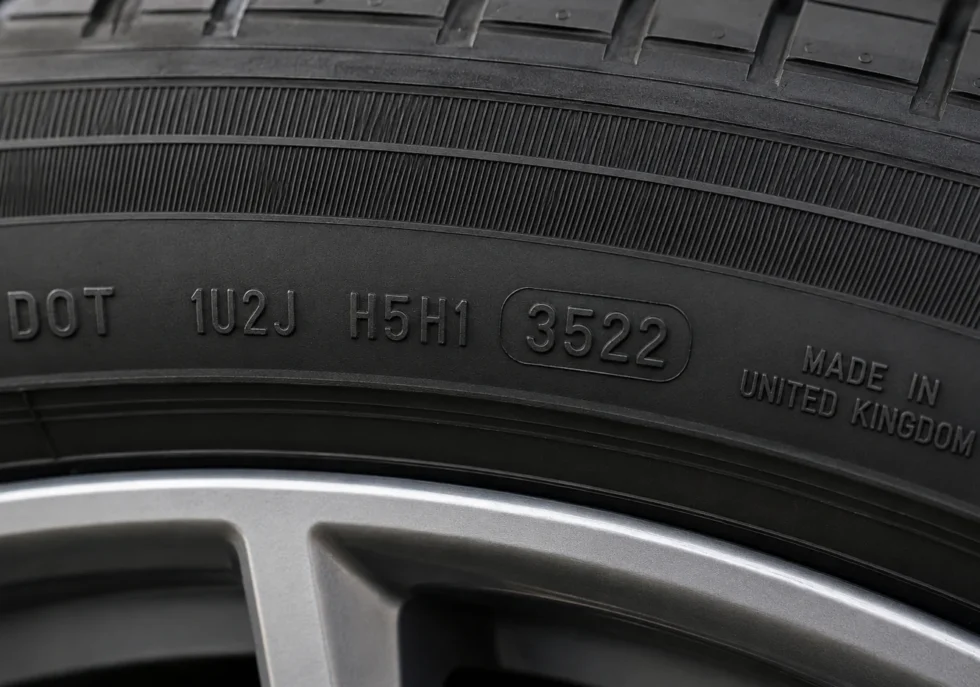
Tyres don’t have a single, universal expiry date printed on them or set out in UK law for ordinary cars. What they do have is a four-digit manufacture date code on the sidewall, which tells you when the tyre was made, and a general safety expectation that tyres older than around ten years should be inspected very closely, or replaced, even with tread remaining.
There is a specific legal restriction, though: since February 2021, it’s been illegal to use tyres aged ten years or more on the front steering axles of lorries, buses and coaches, and on all axles of minibuses with a single tyre configuration. This restriction applies to those specific heavier vehicle categories rather than to private cars in general, so it’s worth not confusing a targeted legal rule for HGVs and buses with a blanket law for every car on UK roads.
How to Check the Age of Your Tyres
Every tyre sold in the UK carries a four-digit date code on the sidewall, usually inside an oval or after the letters “DOT”. For example, a code reading 3522 means the tyre was made in week 35 of 2022: the first two digits are the week of manufacture, the last two are the year. This applies to new tyres, part worn tyres, tyres already on a used car you’re buying, and spare tyres, so it’s worth checking on all of them.
What Does the Tyre Date Code Mean?
The date code only tells you when the tyre was manufactured, not how it’s been used, stored or maintained since. Two tyres with the same date code can be in very different condition depending on their history, which is why the code is a useful starting point but never the whole picture.
Signs Your Tyres Are Getting Too Old
Cracking in the sidewall or between tread blocks, a hardened or brittle feel to the rubber, and visible discolouration are all common signs of an ageing tyre, even one with plenty of tread remaining. These signs matter more than the date code alone, because they show how the tyre has actually held up rather than just how long it’s existed.
Signs Your Tyres Need Replacing
- Tread at or approaching the 1.6mm legal minimum
- Uneven wear across the tyre’s width
- Cracks in the sidewall or tread blocks
- Bulges or lumps anywhere on the tyre
- Cuts, especially deep ones near or exposing the internal cords
- Persistent vibration through the steering wheel
- Repeated, unexplained pressure loss
- Damage after hitting a pothole or kerb hard
- Old age combined with any visible deterioration
Bulges, exposed cords and deep cracking all need immediate attention rather than waiting for the next scheduled check, since these indicate the tyre’s structure may already be compromised.
Can Old Tyres Pass an MOT?
For ordinary cars, MOT testers don’t currently fail a tyre for age alone; they’re checking tread depth, damage, and general condition rather than the manufacture date on its own. That means an old tyre with good tread and no visible damage can pass, which is exactly why age needs checking separately from the MOT rather than assumed to be covered by it. Passing an MOT is a snapshot of that day, not a guarantee that the tyre will remain safe for the following twelve months, particularly if it’s already several years old.
Tyre Age vs Tread Depth: Which Matters More?
Neither one on its own tells the full story. A young tyre with low tread is mainly a wear problem. An old tyre with good tread still needs its condition checked for cracking or hardening. A part worn tyre with decent tread still carries an unknown history that matters. The safest approach is to treat age and tread depth as two separate checks that both need to pass, rather than assuming a good result on one means the tyre is fine overall.
| Situation | What It Means |
|---|---|
| Young tyre, low tread | Wear is the main concern |
| Older tyre, good tread | Check condition and cracking closely |
| Old tyre with cracking | Potential safety concern, get it inspected |
| New tyre, older manufacture date | Check storage history before fitting |
| Part worn tyre, good tread | Previous use and condition still matter |
How to Make Your Tyres Last Longer
- Check tyre pressure regularly against the manufacturer’s recommended setting
- Inspect tread depth and look for cracks, bulges or cuts
- Have wheel alignment checked if you notice uneven wear or pulling
- Avoid harsh acceleration and braking where possible
- Try to avoid hitting kerbs and potholes at speed
- Don’t overload the vehicle beyond its rated capacity
- Store any unused or spare tyres away from sunlight, heat and chemicals
- Replace any tyre showing damage or serious deterioration promptly
Conclusion
There’s no single lifespan that fits every tyre. Age, mileage, condition, maintenance, storage and how the car is driven all play a part, and none of these should be checked in isolation. The safest approach is a simple routine: check tread depth regularly, keep an eye on pressure, look for cracks, bulges or damage, and note the manufacture date on the sidewall so you know roughly how old each tyre is. If a tyre is worn, damaged, or showing signs of ageing that a professional flags as a concern, it’s time to replace it.
If you’re not sure about the condition of your tyres, TyresFlow’s mobile tyre fitting service can come to you for a proper inspection and replacement, wherever you are.
Common UK Questions About Tyre Lifespan
My tyres are five years old with 5mm of tread. Should I replace them?
Not necessarily, but they’re at the age where a closer inspection for cracking or hardening is worth doing, alongside your normal tread checks.
My car has low mileage but old tyres. Do they need replacing?
Low mileage doesn’t stop tyres ageing, so check the manufacture date and inspect the rubber’s condition rather than assuming low use means low wear on the tyre.
Why are my rear tyres lasting longer than my fronts?
On front-wheel-drive cars, the front tyres usually handle more of the steering, braking and drive force, so it’s common for them to wear faster than the rears.
Do tyres have an expiry date in the UK?
There’s no single legal expiry date printed on car tyres in the UK, and no blanket law forcing replacement at a fixed age for ordinary cars. What exists is a four-digit manufacture date code and a general safety recommendation to inspect closely from around five years and consider replacement by around ten. A specific legal age restriction does apply to certain HGVs, buses and minibuses.
Do budget tyres wear out faster than premium tyres?
Not necessarily, and price alone isn’t a reliable predictor of exact lifespan. Compound and construction differences can affect wear characteristics, but driving style, mileage, road conditions and maintenance generally have a bigger impact. Whichever tyre you choose, the same tread and condition checks apply.